



ATT Incoming President's speech: AI must be transparent, ethical and secure
Share this article



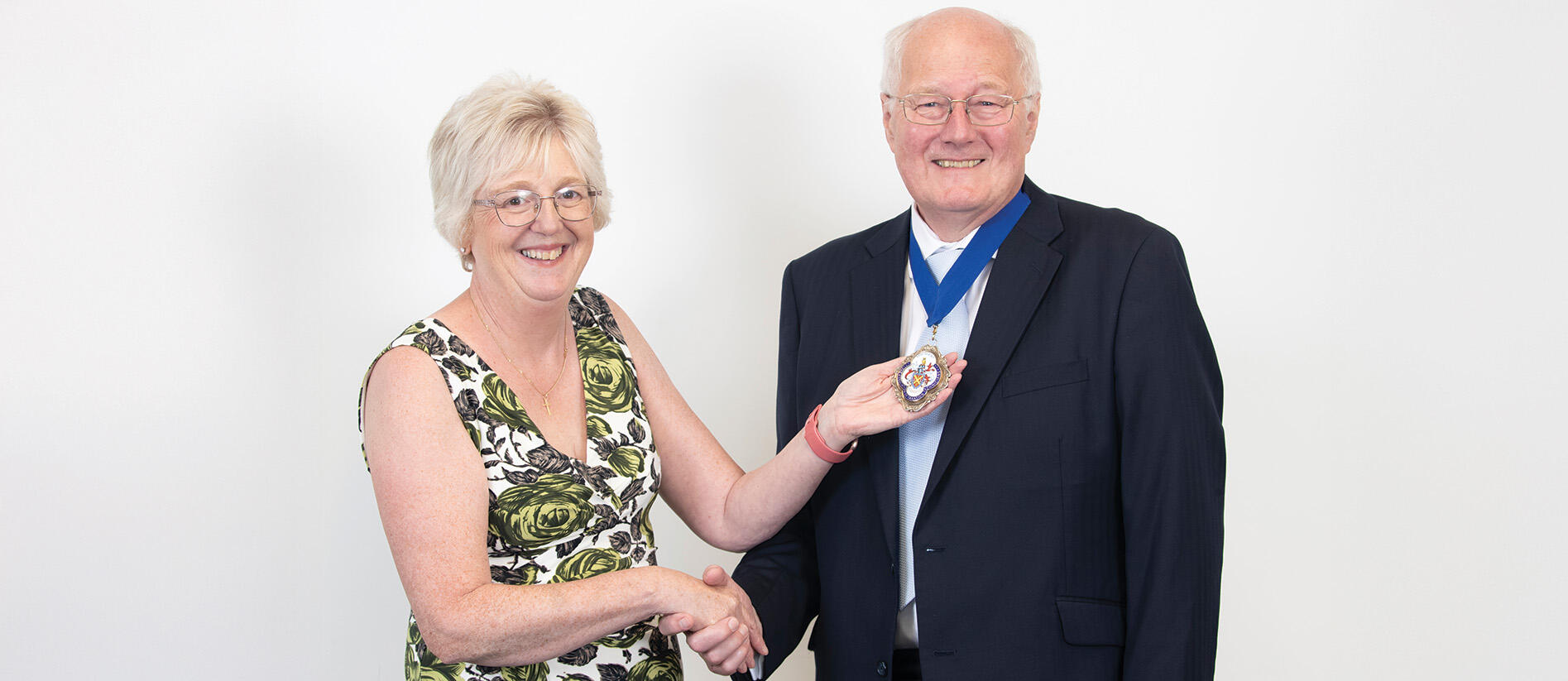
The new President of the ATT, Graham Batty, spoke at the Association’s AGM on 10 July about the impact of AI on the tax profession and the ATT’s support for mandatory registration of tax professionals with a recognised professional body.
It is an enormous privilege to have been chosen to serve as President of the ATT for a second time. Thank you for your confidence and I promise to hand your Association on in 12 months’ time in the same, or better, condition as it is today.
Not just exams
The ATT now has over 10,000 members and some 7,000 registered students. Our offering centres on the examinations you need to get those coveted letters ATT after your name, but we do far more than that:
- Working with Tolley Exam Training, we offer four short online Foundation qualifications – an introduction to personal tax, business tax, VAT compliance and transfer pricing.
- We offer non-UK diplomas in VAT compliance, corporation tax, transfer pricing and international taxation, principally in the GCC states.
- Our award-winning technical team produces our ever expanding series of ‘How to Guides’, one for tax agents and one for the public; responses to consultations; technical articles; newsletters; resources for schools...
One of the things I am most proud of is the work that the ATT does with schools. We regularly visit schools and careers fairs to talk about a career in tax and the Level 4 apprenticeship in taxation. This has allowed many school leavers to obtain the ATT qualification and valuable practical professional experience without the burden of student debt. For employers, the tax apprenticeship qualifies for funding of up to £15,000 and new employees can quickly be dealing with chargeable client work.
We cannot, however, afford to sit on our laurels as there are several challenges and opportunities facing us.
Making Tax Digital
At the 2017 AGM, I welcomed HMRC’s decision to pause the roll out of MTD to allow for further development and testing of what, at the time, appeared to be a rushed system. I am pleased to say that HMRC have become increasingly more open and engaged since 2017. There is a real sense that they are getting out there, speaking to agents and listening to their concerns. Their focus is now shifting towards the practical challenges of getting ready for April 2026 – something which is also driving our offering to members.
However, there remain areas of confusion even at this late stage, including how the year-end ‘digital tax return’ will work in practice, and how and when the digitally excluded will be able to apply for exemption. Alongside this, HMRC have a real challenge when it comes to raising awareness amongst the unrepresented, who remain largely ignorant of the change.
Standards and regulation
The second area is regulation of the tax profession and raising standards in the tax advice market. The March 2024 consultation looked at two steps. Firstly, that HMRC would require all agents who interact with HMRC on behalf of a client to register with HMRC’s Tax Adviser Registration Service. This will be put into legislation in Finance Bill 2025.
Secondly, they will then progress to oversight through mandatory registration with either a recognised professional body, a hybrid HMRC-industry version or a government regulator. ATT believe that of these the first would be the best way forward. A hybrid version would be unworkable, and an independent regulatory body would prove excessively bureaucratic and expensive.
Mandatory registration with HMRC’s Tax Adviser Registration Service clearly allows HMRC to refuse to deal with agents whose work, in their view, includes unacceptable features such as high error rates and delays. However, this only addresses compliance issues and does not really provide any additional consumer protection. This will have to wait for the second phase.
While we are in favour of mandatory registration, this raises the question of what to do about agents already in practice who are not a member of a professional body. They may, of course, register as a student and sit the exams, but this is not always practical. A test of competence and background checks to show good character could work but only as a short-term interim measure. Simply allowing them to apply for membership based on experience would be a step too far.
We await the further consultation promised on stage two with interest.
Artificial intelligence
The final challenge I should like to focus on is the impact of artificial intelligence, and particularly generative AI, on the tax profession. Without doubt this offers opportunities for increased efficiency in how we work. However, a recent global study by KPMG and the University of Melbourne indicated that only just over 50% of the UK public perceive AI systems as trustworthy and only 33% believe that current regulations make AI safe to use.
Accepting that AI is here to stay, what should we, as tax professionals, be doing? Maintaining professional scepticism is paramount. Where work is delegated, including to AI, you remain responsible for it, which means having systems in place to review and verify AI output. I am sure you have all heard of the tax appeal hearing where all the cases cited by the appellant had been generated by AI and did not exist.
Given the need to review and verify AI generated output, how do we ensure that staff have the knowledge to do this competently? It is simple with a letter, but what about technical issues if staff are not gaining experience by carrying out research themselves? How the ATT exams equip new members to do this is something we will be addressing.
Finally, AI needs to be used in a transparent, ethical and secure way. Transparent, in that clients know when AI tools are being used; ethical, in that you do not pass off AI generated work as your own; and secure, in that strong cyber security procedures are in place.
Concluding remarks
To finish, I should like to repeat the three challenges I set at the end of my speech as incoming President back in 2017, which are still just as relevant today. For members, let us know about the issues and problems you face in day-to-day practice so that we can identify common themes and work with HMRC to deal with these; for employers, let us know what you want from our qualifications so that we can make them more relevant; and for taxpayers, if you have a tax problem talk to an ATT member.
This speech has been abridged for space reasons. The full speech can be viewed at: tinyurl.com/ATTAGM25 (20m48s)