



HMRC: Escalation route for complex queries welcomed
Share this article



And a cautious welcome for proposal to take 300,000 out of self-assessment.
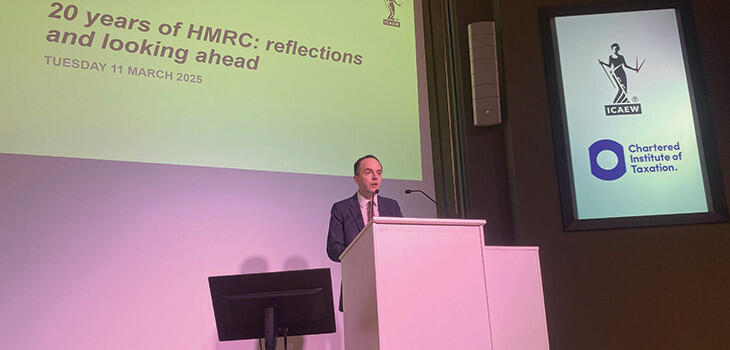
CIOT has praised the announcement by HMRC of an escalation route for agents with self-assessment and PAYE queries which are over four weeks old, while ATT has welcomed the development of a ‘simple online service’ to make tax administration easier for taxpayers who owe small amounts of trading income. The announcements were made by Exchequer Secretary James Murray at a CIOT-ICAEW conference in March marking 20 years of HMRC.
The new escalation route for slow moving queries reflects a recommendation in December’s CIOT-ICAEW report on improving HMRC customer service that called on the tax authority to ‘ensure there are appropriate routes to escalate complex cases to help resolve problems more effectively without prolonged and repeated interaction with HMRC customer service’. It also follows discussions with CIOT, ATT, ICAEW and other professional bodies at which the need for such escalation routes was raised, alongside the need for a reliable ‘tracker’ to allow agents and taxpayers to monitor progress with their correspondence.
The Exchequer Secretary told the CIOT-ICAEW conference that: ‘Following consultation with professional bodies and practising agents, including some of you in this room, from the end of this month, HMRC will launch a new service to provide a dedicated escalation route for agents with Self Assessment and PAYE queries which are over four weeks old.
‘A new, dedicated team of experienced technicians and advisers will adopt a “once and done” approach, taking end-to-end ownership of cases and maintaining regular communication with agents.
‘This builds on the changes we announced last October where we combined PAYE and Self Assessment queries, introduced a dedicated option on the Agents Dedicated Line for repayment progress chasing, and launched agent webchat.
‘These improvements have been designed with you to address concerns that agents have raised with us, to enhance service efficiency and to strengthen HMRC’s relationship with agents through a more accountable and streamlined approach.’
Ellen Milner, CIOT’s Director of Public Policy, welcomed the announcement, expressing a hope that in due course this new approach could be expanded both to other taxes and to unrepresented taxpayers.
Self-assessment simplified?
ATT gave a cautious welcome to the Exchequer Secretary’s announcement that the government intends to raise the income tax Self Assessment reporting threshold for trading income from £1,000 to £3,000 within this parliament, and to align it with new reporting thresholds for property and other taxable income at £3,000 gross each.
Emma Rawson, Director of Public Policy, said it was ‘a useful step towards reducing the administrative burden many people face when filing tax returns for comparatively smaller amounts’. She said that ATT was ‘pleased to see the announcement of a new, simple online service to help people comply with their tax obligations’, and hoped that HMRC would consult the profession around its design and delivery.
However, she warned that the announcement would not address the growing number of taxpayers being brought into Self Assessment due to the freezing of the personal allowance, such as savers and pensioners. These people would also benefit from a simpler online system compared to the full self-assessment process, she suggested. She also warned of a risk that those affected could be confused by the two thresholds they now need to consider.