



International Tax Directors Forum: a global perspective

Share this article



Senior international tax leaders of professional bodies came together to discuss how collaboration, digital transformation and innovation can help shape the future of tax administration.
At CIOT’s International Tax Directors Forum on 22 July, hosted by CIOT Chief Executive Helen Whiteman, a small group of chief executives and senior leaders from overseas tax institutes came together for a focused conversation on the future of tax administration.
The forum was a great opportunity for HMRC to engage with international colleagues and compare how tax administrations around the world are responding to common pressures: rising customer expectations, rapid technological change and the need to protect revenues while maintaining public trust.
There was also cause for celebration as the forum marked the final event for my former colleague, and HMRC’s former Second Permanent Secretary, Angela MacDonald. Angela, who retired in July, made an enormous contribution to HMRC and our international work throughout her years of service, and it was fitting that her final engagement reflected the importance of partnership and international learning.
We used the opportunity to shine a light on the important work happening across HMRC, while looking ahead to key priorities that will continue to shape the department for years to come.
We opened the session with an overview of our role and priorities. This covered our current performance, challenges and opportunities and we were able to explain not only where HMRC is today, but how we need to change between now and 2030 to meet the needs of customers, government and partners as set out in our Transformation Roadmap.
The key to meeting these customer expectations is our programme of digital transformation and the opportunities that new technology creates to work differently.
The discussion moved from our ambitions to action: improving day-to-day performance, closing the tax gap, strengthening compliance and creating a system that is more digital, resilient and easier for customers to navigate.
Digital transformation with people at its heart
HMRC’s ambition is to become a digital-first organisation, with at least 90% of customer interactions taking place digitally while maintaining high levels of customer satisfaction.
But digital transformation is not simply about shifting existing processes online. It is also about more fundamental change to the tax system, in turn making services more seamless for taxpayers and agents.
The launch of Making Tax Digital for Income Tax in April was highlighted as an important milestone, and there have been 570,000 sign-ups so far, with 436,000 quarterly updates submitted. HMRC is also investing in a new cloud-based contact centre and an Enterprise Customer Relationship Management platform: digital tools to replace legacy systems and provide a complete view of customer journeys and contact across phone, email, webchat and social media.
The HMRC app now has more than 7.6 million users, up 28.6% in a year.
Artificial intelligence was also a significant area of interest during the discussion. HMRC is leading one of the largest deployments of AI in government, using technology to improve customer experience, support colleagues and strengthen compliance. AI and advanced analytics helped to protect and recover £10 billion in 2025-26, while ‘Ask HMRC’ – a 24/7 automated service that can provide answers to tax queries, check personal details and transfer users to a human adviser – handled 6.3 million customer interactions.
The message is clear: technology can help HMRC work faster, as it frees up colleagues for more complex work and helps us to make better use of data. But trust is essential and human oversight remains in place for decisions affecting customers. Innovation must be responsible, transparent and trusted.
Understanding and closing the tax gap
A discussion around the tax gap underlined the scale and complexity of protecting revenue for public services. The 2024-25 tax gap is provisionally estimated at 6.4% of total theoretical tax liabilities, equivalent to £59.2 billion. While significant, it remains low by historical and international standards.
We are tackling the tax gap by investing in people, data and technology. More than 2,100 extra compliance officers have joined since 2024, and we are on track to recruit a total of 5,500 by 2030. We are also recruiting 1,200 additional debt management colleagues by the end of 2026-27. Together with wider government action, these measures are expected to generate around £10 billion of additional annual tax revenue by 2029-30.
Most taxpayers want to do the right thing, and while we collected 93.6% of all tax due in 2024–25, our focus is on helping even more customers to get things right first time through clearer guidance. Last year, HMRC’s compliance activity secured a record £50.2 billion in compliance yield, helping to protect funding for the public services we all rely on.
Raising standards in the tax advice market
Another topic that prompted interest was reform of agent registration and the effort to raise standards in the tax advice market. Government has invested £36 million to modernise tax adviser services, support higher standards and help reduce the tax gap. Since May, paid tax advisers acting for clients have needed to register through an Agent Services Account and meet minimum professional standards. Existing Agent Services Account holders will not need to re‑register, but they will need to provide additional information by March 2027.
For international attendees, the discussion illustrated a shared challenge: how to protect taxpayers from poor-quality advice and build greater trust in the market. Professional advisers remain central to a modern tax system, ultimately helping taxpayers to get their tax right.
Supporting customers who need extra help
The forum also explored how HMRC supports customers who need additional help. While many customers expect fast, simple, digital services, others may face health conditions, personal circumstances, low confidence or digital exclusion. Ensuring that everyone can access the right support at the right time is central to HMRC’s customer service strategy.
Through the Voluntary and Community Sector Grant Funding Scheme, HMRC has committed more than £11 million to help customers with complex needs or those who are harder to reach through traditional channels. More than 43,000 customers received support between April 2025 and April 2026, with grants worth £3.73 million annually to be awarded between 2027 and 2030.
Learning from international partners
International engagement was a natural focus. HMRC draws on global evidence and best practice to inform domestic reform, while sharing our own experience with partners. Strong relationships allow tax administrations to learn from common challenges, including digital adoption, customer experience, compliance risk, avoidance, fraud and financial crime.
HMRC’s international work is delivered through bilateral relationships and multilateral forums, including the OECD Forum on Tax Administration, the World Customs Organization and the Commonwealth Association of Tax Administrators. Partners such as Ireland, Canada, South Africa and the Netherlands offer valuable perspectives. In an interconnected world, no tax authority has all the answers alone.
Co-creating a tax system fit for the future
Perhaps the most important message from the forum was that transformation is a shared endeavour that requires transparency. Sharing our direction of travel helps partners understand where HMRC is heading and how they can contribute. Professional bodies, agents, software developers, representative organisations and international partners provide expertise and challenge.
By continuing to listen, learn and collaborate, HMRC can build a tax system that is simpler, more trusted and fit for the future.
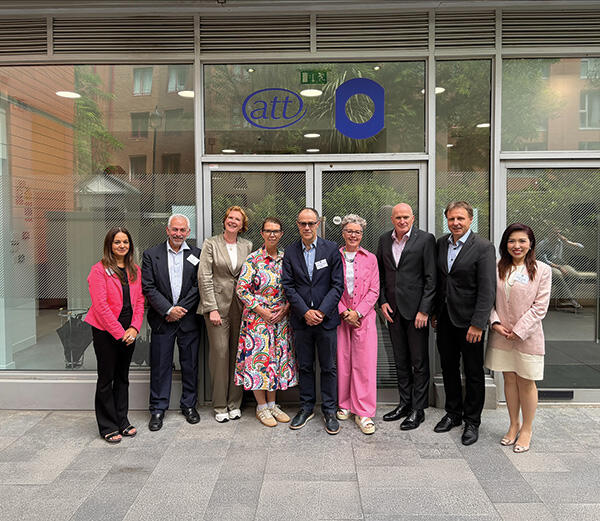
(L-R): Shamim Panchbhaya (Canada), Keith Engel (SAIT) (South Africa), Paulien Geerdink (NOB) (Netherlands), Angela MacDonald (HMRC), Jonathan Athow, Helen Whiteman, Martin Lambe (ITI) (Ireland), Radek Neuzil (Czech Republic Chamber of Tax Advisers) and Winnie Shek (TIHK) (Hong Kong).
© Getty images