



Party conferences: the politics of tax
Share this article



Tax policy is proving both a dividing line and a test of credibility – with wealth, property and inheritance taxes all under fierce debate.
A year into the new parliament, tax is proving one of the government’s biggest headaches: the tax rises that have already happened (employer national insurance (NI)), those in the pipeline (inheritance tax (IHT)) and, looming over the horizon, those yet to come but anticipated in the Budget. All were on the agenda at this year’s party conferences, and creating some sizeable dividing lines between the parties.
Reform UK in Birmingham
Reform UK kicked off the conference season at Birmingham’s NEC, buoyed by high-profile defections and a surge in the opinion polls.
The party’s manifesto last year was ambitious, promising £90 billion a year of tax cuts, including reducing corporation tax to 15% and lifting the personal allowance to £20,000. However, in his conference speech, deputy leader Richard Tice said the party would need to cut ‘wasteful government spending’ and ‘useless regulations’ before being able to afford what he called ‘performance-related tax cuts’. Party leader Nigel Farage was even clearer in a post-conference interview, saying: ‘We will ensure savings are made before implementing tax cuts.’ A major economic policy speech is expected from him ahead of the Budget.
During the summer, Farage announced a new tax policy for non-doms, proposing a one-off £250,000 fee to exempt overseas income and capital gains from UK taxation. As well as attacking the government’s non-dom policy, Reform condemned the energy profits levy, the increase in employer NI and proposed changes to IHT reliefs at their conference.
Lib Dems in Bournemouth
The Liberal Democrats convened in Bournemouth, promising to tax banks to finance lower energy bills and support the hospitality sector with targeted tax cuts. While policy debates were plentiful, much of the conference focused on strategic positioning – how to build on recent electoral successes and capitalise on the unpopularity of Labour and the Tories.
The Lib Dems’ economic agenda emphasised closer cooperation with the EU, including a new Customs Union and a path back to the Single Market, and the formation of an ‘economic Coalition of the Willing to stand up to Trump’s tariffs’. Leader Sir Ed Davey outlined a plan to halve energy bills by 2035, funded by a windfall tax on banks’ QE-related profits.
The party reaffirmed its opposition to the government’s proposed IHT changes. Treasury spokesperson Daisy Cooper is arguing for a ‘family farm test’ to ‘differentiate between real farmers and tax-dodgers’. Policies passed at the conference included relief from employer NI increases for hospitality SMEs and hospices, and a reiteration of the commitment to abolish business rates in favour of a land value tax. A climate change paper adopted in Bournemouth proposes new tax incentives for energy efficiency and the reform of air passenger duty. The party is resisting calls for a wealth tax but continues to argue for further increases to capital gains tax (CGT).
Labour in Liverpool
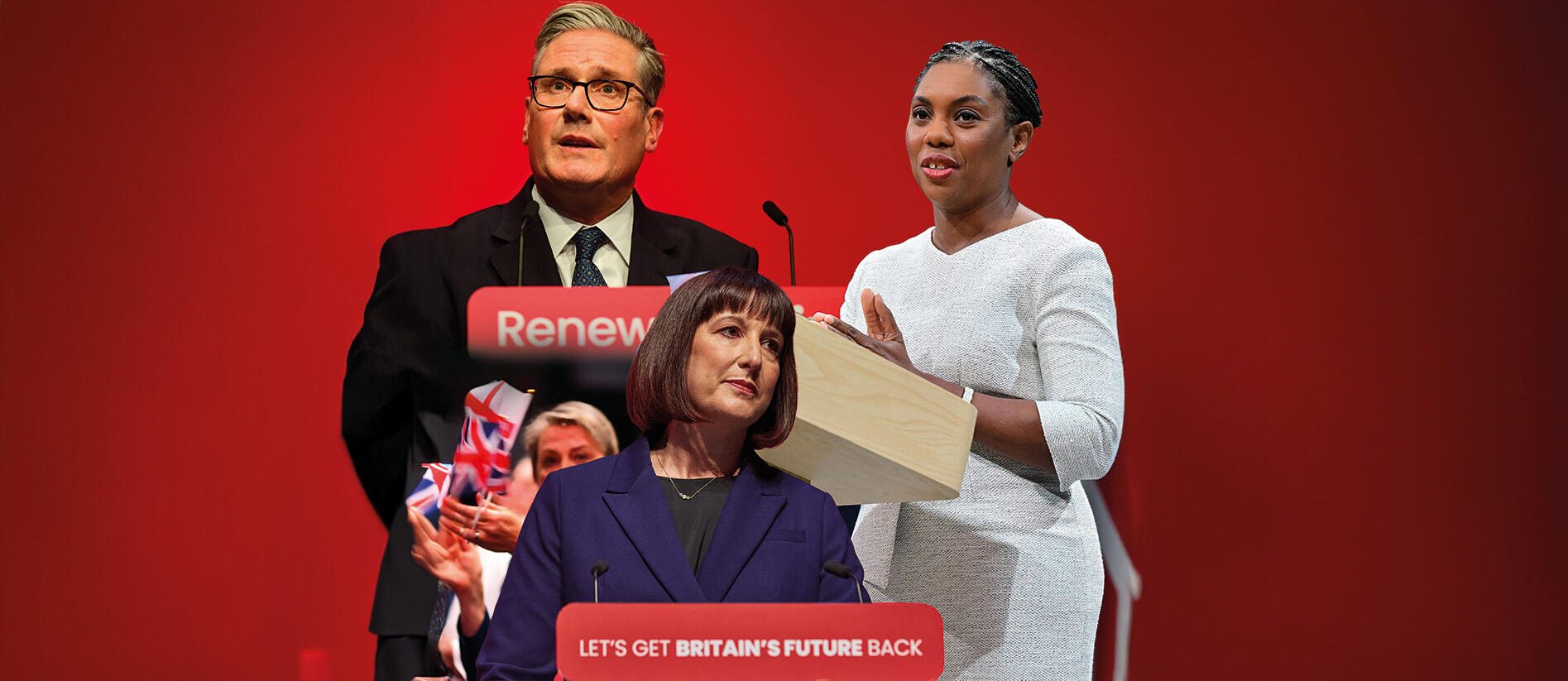
Labour’s conference in Liverpool was marked by a candid acknowledgment of the need for tax rises in the upcoming Budget, though specifics were left deliberately vague. Both Prime Minister Sir Keir Starmer and Chancellor Rachel Reeves emphasised economic growth as the government’s defining mission, linking it to improved living standards and national renewal. Starmer’s speech rallied activists with promises to fight for the ‘soul of the country’, directly challenging Reform UK and positioning Labour as the bulwark against ‘snake oil merchants’ on both political extremes.
Reeves signalled in her speech that further tax increases may be needed, citing global economic headwinds and the lingering effects of past economic mismanagement. While pledging to keep taxes ‘as low as possible’, both she and the new Exchequer Secretary Dan Tomlinson hinted that the government would choose tax increases over higher borrowing or spending cuts to address any fiscal shortfall. The party reaffirmed its commitment not to raise employee NI, income tax rates or VAT, but left the door open to dropping that commitment if circumstances require. If possible, ministers would prefer to keep this promise and instead rely on other revenue-raising measures, such as extending the freeze on income tax thresholds and increasing CGT.
Rumours that VAT might be put on private healthcare were rebutted with unusual firmness, though other VAT increases and a reduction in the VAT registration threshold for small businesses are thought to be under consideration. The conference passed a motion calling for a wealth tax and an extension of the windfall tax on energy companies, but these are not expected to become government policy. Interest in taxing wealth was evident, but most senior figures preferred reforms to existing taxes over a new wealth tax.
Property tax reform was another topic of debate, with some MPs advocating for a proportional property tax to replace council tax and stamp duty land tax (SDLT). However, ministers gave little away, and the Housing Secretary ruled out council tax revaluation. The government appears determined to press ahead with reforms to IHT, despite protests from farmers and cross-party calls for the proposals to be rethought.
Conservatives in Manchester
The Conservative Party’s conference in Manchester was policy-heavy, with leaders proposing tax breaks for young people, home buyers and high street businesses, funded by cuts to welfare and the civil service. Party leader Kemi Badenoch and Shadow Chancellor Sir Mel Stride emphasised fiscal responsibility and economic credibility as the keys to Conservative revival, citing polling that shows the party is more trusted on economic issues than Labour or Reform UK.
At the heart of the Conservative economic prospectus is the claim that they alone would have the discipline to make substantial cuts to public spending, enabling them to both pay down debt and cut taxes, ending Labour’s ‘borrowing and tax doom loop’ and delivering economic growth. Whether they could deliver cuts on the scale promised (£47 billion) is key to the credibility of their proposed tax cuts, of which the headline announcement from the conference was the abolition of SDLT on primary residences, regardless of value, with the tax remaining for second homes and non-UK residents. SDLT is devolved, but the Scottish and Welsh Conservatives have both said they would scrap their SDLT equivalents if they were to gain power (a big if) in next year’s elections.
Stride announced another two tax cut proposals in his conference speech. The first was a ‘First Job Bonus’, redirecting the first £5,000 of NI paid by young workers towards a home deposit or savings. On the face of it, this represents a notable switch in priorities for a party that targeted retired people with a big tax cut at last year’s election. The second was a promise to exempt retail, hospitality and leisure firms in England from business rates up to an annual threshold of £110,000 per year, with local councils reimbursed for the lost revenue.
On the fringe, a candid answer from the Shadow Chancellor dismayed some of his colleagues. He said that, if taxes had to go up to fill a ‘black hole’, targeting income tax would be the least bad choice. Stride was also challenged about comments he made in 2021 that some interpreted as sympathetic to a wealth tax. He dismissed this suggestion, calling wealth taxes ‘an extremely bad thing’.
Elsewhere at the conference, the party reaffirmed its opposition to Labour’s inheritance tax changes, pledging to repeal them in its first Budget, and promised to reverse VAT on school fees. Shadow Business Secretary Andrew Griffith committed to improving HMRC service levels (with a new customer feedback tool) and reviewing IR35 rules. Shadow Energy Secretary Claire Coutinho pledged to ‘axe the carbon tax’ (referring to Carbon Price Support) and end the energy profits levy.
The other parties
The Green Party conference in Bournemouth saw new leader Zack Polanski give a high profile to the party’s support for a wealth tax targeting the richest 1%, positioning it as a potential bargaining chip in the event of a hung parliament. A wealth tax was the only tax mentioned by Polanski in his leader’s speech, but at last year’s election the party manifesto proposed taxes adding up to an extra £172 billion a year, including an £80 billion a year carbon tax. It is unclear at this stage whether the party is rowing back on these other policies. Also at the conference, party members backed a motion to increase taxes on landlords as part of efforts ‘to seek the effective abolition of private landlordism’.
The Scottish National Party (SNP) conference in Aberdeen focused on the party’s strategy for achieving Scottish independence but also gave plenty of attention to tax policy. Finance Secretary Shona Robison highlighted Scotland’s progressive income tax regime, with higher rates for top earners and lower rates for most taxpayers compared to the rest of the UK. However, she acknowledged that the limits of income tax increases had been reached, and future reforms would need to look beyond this. The conference endorsed a motion to explore a local wealth tax, the use of the word ‘local’ acknowledging that, under the current devolution settlement, the Scottish Parliament cannot legislate for new Scotland-wide taxes without the UK Parliament’s approval. They also called for an end to the energy profits levy.
At time of writing, the SNP are leading in the opinion polls ahead of next year’s devolved elections, and so (narrowly ahead of Reform) are the Welsh nationalists, Plaid Cymru. At their conference in Swansea, Plaid’s leader Rhun ap Iorwerth called for a wealth tax. A recent motion tabled by the party in the Senedd called on the (currently Labour) Welsh government to make representations to the UK government to reverse its proposed IHT changes and the increase to employer NI, but did not argue for changes to Welsh income tax rates, which currently remain aligned with those in England.
Our party conference debates
Wealth taxation took centre stage at this year’s Labour and Conservative party conferences, where the CIOT and the Centre for the Analysis of Taxation (CenTax) hosted two high-profile fringe debates. Both drew packed audiences, underlining how far the issue has climbed the political agenda and how sharply views differ on how wealth and capital should be taxed.
At the Labour Conference in Liverpool, CIOT President Nichola Ross Martin chaired a lively panel with Lloyd Hatton MP, Gemma Tetlow of the Institute for Government, CenTax Director Arun Advani and barrister Emma Chamberlain CTA. Tetlow warned that fiscal constraints meant future governments would have little choice but to raise revenue, with wealth taxes popular among voters who assume they would not be personally affected. Advani described the current tax system as ‘badly designed’ and argued that reforming capital gains tax could promote growth. He cautioned, however, that recent changes to the non-dom regime risked deterring investment.
Chamberlain called those reforms ‘a move to simplicity’ but urged policymakers to adopt a more strategic, long-term approach instead of ‘whack-a-mole’ policymaking. Hatton argued that HMRC lacked the data, skills and appetite to enforce compliance among the wealthiest, calling for stronger resourcing and more consistent enforcement.
In Manchester, the Conservative Conference debate – again chaired by Ross Martin – featured CIOT Vice President John Barnett, CenTax Director Andy Summers and former Treasury Minister John Glen MP. Glen, speaking days before his party announced plans to abolish stamp duty land tax, warned that taxing ‘wealth creators’ could stifle investment and employment, arguing that wealth should not be taxed like income. He said aligning capital gains tax with income tax rates would penalise entrepreneurs and reflected on the practical challenges of turning policy intent into effective legislation. Summers dismissed the idea of a Labour wealth tax as ‘zero chance’, suggesting that government capacity for such reform simply doesn’t exist.
Barnett said reforms to the tax treatment of non-doms were overdue, but cautioned that bringing them within the UK’s high rates of inheritance tax was a major problem. He also highlighted challenges associated with introducing a wealth tax, including mobility and liquidity issues, and the resources required to administer the tax.
Across both conferences, the debates revealed striking contrasts in philosophy but also common concerns around simplicity, enforcement and public confidence in the tax system – themes that continue to shape the national conversation about wealth and fairness.
Some concluding thoughts
So where does all this leave us? Waiting for the Budget is the succinct reply. That it will contain tax rises is a universal expectation, the only questions being of what kind and on what scale?
But looking further ahead, the question arises of what the government’s tax strategy is. Is it simply to pluck the necessary number of feathers with a minimum of hissing or is there something deeper? At times, there are signs of a desire to tax work less and wealth (or at least income on wealth) more. But fiscal circumstances have meant that while the latter has happened, the former so far has not. And many seem to think that the limits of taxing the wealthy without causing counterproductive behavioural effects have now been reached.
There are relatively few signs that serious tax reforms are on the agenda. (No money to pay off the losers perhaps?) But the one area where there is at least a debate going on is property taxes. It would be a surprise not to see some developments on this front – if not at this year’s Budget then at next year’s.
The economy is, as ever, a political battleground – perhaps a little less than usual with the enhanced focus on issues of migration and identity, but all the parties believe that it will play a big part in people’s decision-making at the next election, and in whether all of our current crop of leaders make it that far.
It has become a commonplace – but no less accurate for that – to observe that British politics is being largely conducted in two blocks at the moment. On the left, Labour is attempting to fend off the attempts of rivals to seduce its supporters away with – among other things – calls for higher taxes on the rich, and to a lesser extent big business. On the right, the Conservatives are engaged in a contest with Reform which, while broader, is partly being fought on the ground of economic credibility: who would actually deliver lower taxes and a smaller, less regulatory state? Between the two blocks, the argument is the old one: higher taxes for better public services, or lower taxes to keep more money in your pocket?
The outcomes of these battles on the field of public opinion will help set the shape of British politics for this parliament and beyond.
© Getty images