



Private client advice: collaboration is key

Share this article



Legal and tax professionals often share responsibility for their client’s benefit. We consider how they should work together to provide private client advice.
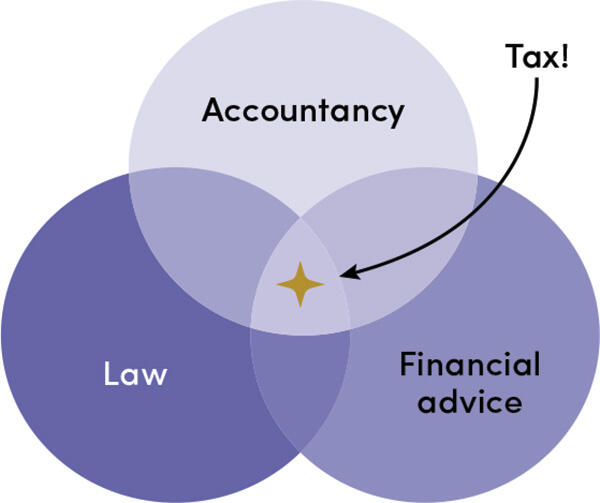
In the realms of private client advice, the tapestry of tax, financial and legal guidance can be so tightly interwoven that distinguishing where one thread ends and the other begins can be challenging.
As a solicitor with 20 years’ experience in private client work, I appreciate the importance of collaboration with financial advisers, accountants and specialist tax advisers. Together, we tackle estate planning, probate, trusts, business interests and property transactions to meet our clients’ holistic needs.
My understanding of the UK tax system has recently deepened after qualifying as a member of the Association of Tax Technicians. This has highlighted the blurred boundaries where my expertise as a lawyer overlaps with that of tax specialists. However, I have to recognise when I need to step aside, and when a more experienced tax expert should step forward.
A lawyer’s role
The core tasks of many lawyers involve:
- identifying the client’s problem;
- interpreting and applying relevant law from cases and statutes;
- advising clients on their rights and duties; and
- obtaining instructions and drafting appropriate documents.
This appears simple enough in theory but in practice these steps are complex. Clients often seek advice during emotionally charged times, when they can be facing their own mortality or coping with a loved one’s incapacity or recent death. Initial meetings require careful listening and observation. We adapt our communication styles and assess risks beyond what is being discussed in the meeting room.
Back at our desks, switching to a more tax-focused mode – dealing with facts, figures and calculations – can offer welcome relief from the emotional intensity at times. The challenge of converting a complex calculation into a simple equation for a client involves focus, discipline and a methodical approach.
I must, however, recognise the limits of my expertise. I am not equipped or regulated to project long-term tax exposure across generations based on financial forecasts. Projecting future inheritance tax liabilities or interpreting trust tax treatment in granular detail involves financial or bespoke tax advice.
Likewise, tax advisers drafting clauses or considering legal areas outside tax may inadvertently give unauthorised incorrect legal advice. Recognising when to bring in the right expert is critical.
Some of the most successful professional collaborations I have been part of are not one-off engagements, but ongoing relationships. Having a clear, mutual understanding of when to refer clients (and what your firm does or does not cover) makes everyone more efficient and improves client outcomes. We will look below at some of the key areas for collaboration.
Why collaborate with other client advisers?
- Client protection: This ensures our clients receive accurate advice, not based on guesswork or assumptions.
- Regulatory compliance: Both the Solicitors Regulation Authority and tax regulators like the Chartered Institution of Taxation expect professionals to know, and stay within, their limits.
- Professional indemnity coverage: Engaging outside our respective remits may not be covered by our costly yet essential professional indemnity policies.
- Clarity in scope: Formalising the referral helps all advisers to document who is doing what, and what has not been advised on. This limits the overall risk to the client of gaps that are left unfilled.
Inheritance planning, wills and estates
Estate planning naturally involves collaboration between lawyers and financial advisers. Lawyers hit a regulatory brick wall when the client needs advice on financial restructuring, so we rely on a trusted financial adviser to explore the client’s investment options and test the outcomes of various scenarios for them.
Financial advisers often come to lawyers when clients lack wills, particularly in blended family situations where intestacy rules would not reflect the client’s wishes. A will incorporating simple life interest provisions, for example, can ensure the surviving spouse is looked after for their lifetime; on their demise, the children from a previous relationship can receive the preserved capital from their parent’s estate.
A lawyer’s initial will meeting reveals more than instructions. The latest cases heard in the courts remind us that we also need to ‘read the room’ to identify any potential red flags, by probing family history, relationships, mental capacity and potential safeguarding issues. We also review financial circumstances and potential reliefs like business property relief, agricultural property relief and charitable exemptions.
Sometimes, a will clause update is the only change required, such as adjusting age stipulations for grandchildren’s inheritance to preserve valuable reliefs like the residence nil rate band.
Clients are strongly advised to consult a financial adviser when an inheritance tax exposure is likely, as the will can only go so far. See the example of Mr Oswald: a cash flow forecast in the box below.
Mr Oswald: a cash flow forecast
Mr Oswald inherited under Mrs Oswald’s will. As the surviving spouse, this left him with all of their combined assets in his sole name, totalling £1.4 million. We prepared a simple will for Mr Oswald, leaving his estate equally between his two surviving children, with legacies to charities that had helped his wife during her short period of illness.
The initial fact find showed that the transferable nil rate band available on Mr Oswald’s future demise would be reduced by lifetime gifts that Mrs Oswald had made. A generous lady, she had made regular gifts to their two children and their five grandchildren, on the incorrect assumption that her annual gift allowance was £3,000 per person rather than total per annum.
The value of the estate was likely to rise rather than diminish. The property was in an affluent area and Mr Oswald had no plans to relocate. By his own admission, his wife had been the ‘big spender’ and he preferred a more modest lifestyle and led a frugal life.
Mr and Mrs Oswald had self-managed their investments, which provided them with an income that they deemed acceptable. Mr Oswald also received a healthy income from his private pension, which had started to mount up in the bank, increasing his overall capital. He was averse to making regular gifts though, as he wanted to ensure that some money was tucked away if needed for emergencies.
On our recommendation, Mr Oswald met with a financial adviser who explored his long-term goals and produced a cash flow forecast. Mr Oswald invested in a discounted gift trust. This was attractive to him as he would retain the right to fixed regular payments yet reduce the estate’s overall value for inheritance tax. Mr Oswald was educated on the possibility of making gifts out of income to his family, and he was pleased that these would not nibble away at his own available nil rate allowance if recorded correctly.
Trusts: lifetime giving and will trusts
As mentioned above, reciprocal relationships between the professions hinge on an understanding of whose skill set needs to be utilised and when. Missteps can occur if lawyers advise on complex trust issues without specialist support or if tax advisers design trusts without legal involvement.
Trusts are legal arrangements and inevitably, lawyers are involved at various stages. Some of the legal issues that arise include:
- identifying the suitability and scope of settlor powers when clients enquire about setting up lifetime trusts;
- advising on the governance and ongoing trustee duties when executors of a will administer the estate and then transition to becoming custodians of trusts established in a will;
- drafting legal documents that support the trust’s administration, including deeds retiring old trustees and appointing replacements;
- drafting documents confirming an appointment of trust assets out of the settlement; and
- drafting minutes recording the thought process behind the trustees’ decisions.
This documentation can be invaluable for future trustees in establishing what has happened during the lifetime of the settlement and why.
However, the specific tax consequences, such as exit charges, periodic charges, capital gains tax and income tax implications, are critical to whether a trust is viable or appropriate. Lawyers and financial advisers must lean on tax advisers’ expertise to assess tax efficiency and monitor the ongoing compliance, such as the preparation of trust accounts and submission of trust tax returns where appropriate.
Ongoing collaboration ensures that trusts are both legally sound and tax efficient. We are also mindful of the capacity in which we are advising the trustees, as this can be in conflict if they are also a potential beneficiary of the trust assets. It is therefore crucial that they receive independent advice in those circumstances. See Mrs Hooper: life interest will trust.
Mrs Hooper: life interest will trust
An independent financial adviser approached me regarding a long running life interest will trust, where Mrs Hooper, the surviving spouse, received income under her late husband’s will.
The new trustees were nervous of their roles and required advice on their responsibilities. Together, we prepared a timeline which could be referred to annually. This set out the deadlines for preparing and submitting tax returns, paying any resulting tax and also ongoing trust expenses. I also prepared an outline of what will happen on Mrs Hooper’s demise and the impact of the trust on her estate, including who pays the resulting tax.
A tax adviser was introduced to advise on the possible capital gains tax implications of selling a business asset whilst held in the trust and prepare the ongoing tax returns. The clients told me they were delighted to be supported by a ‘dream team’ of advisers and felt armed with the necessary information to carry out their new roles efficiently.
Other areas for collaboration
Property and land ownership
Overlap occurs when clients ask lawyers about reliefs like multiple dwellings relief or mixed-use property claims, or when tax advisers recommend legal ownership structures such as tenants-in-common with beneficial interest splits.
Lawyers draft declarations of trust and discretionary trusts, but decisions around stamp duty land tax, capital gains tax or VAT on land and property often hinge on a tax adviser’s technical tax expertise.
International planning
For overseas clients, legal advice on domicile, trust situs and UK reporting obligations must align with tax advice on remittance basis planning, double tax treaties and capital gains tax liabilities.
As a tax technician, I can advise on the tax residency or domicile analysis under the statutory residence tests or HMRC guidance. However, the application of these sometimes baffling rules to the client’s specific circumstances still feels beyond my comfort zone and therefore requires collaboration with tax specialists.
Company and commercial
Lawyers are often consulted over business structuring for family companies, LLPs or property holding vehicles. The tax implications require specialist advisers. Likewise, when a tax adviser is proposing a structure (such as a family investment company), we expect a referral back to a lawyer to advise on the legal set-up, fiduciary issues and implementation of the deeds and supporting documents.
These matters are far too complex to sit squarely in either a solely legal or taxation camp. The solution? An explicit collaborative approach where each adviser tackles what they are fully confident in doing.
Exchanging information
Now that we have explored the benefits of collaborations, let’s get clear on the mechanisms. Any successful onboarding process depends on timely and secure information sharing. From a lawyer’s experience, here is what I find most useful.
Consent and confidentiality
Before lawyers share client information with other professionals, or vice versa, we should attend to the following:
- obtain the client’s informed consent, ideally in writing;
- explain what will be shared, why and how it will be used; and
- confirm whether the new adviser is also professionally regulated.
This ensures we remain compliant with GDPR, confidentiality duties and the Solicitors Regulation Authority rules.
This is the client information which we are able to share with other advisers:
- draft wills, trust deeds or property documents;
- probate records, inheritance estate accounts or deeds of variation;
- information about powers of attorney or third-party interest;
- statements of assets and liabilities, title deeds and valuations;
- family circumstances, client intentions and governance issues;
- previous advice or legal constraints that may affect tax planning; and
- any practical guidance that will aid communication, such as the client is hard of hearing, anxious or grieving.
It is important to remember that legal privilege may apply to legal advice from a lawyer to the client, but that privilege can be lost where that advice is shared with non-lawyers. Typically, privilege may not be relevant, but clients should be made aware of the issue.
Joint client meetings
One of the most effective ways to align advice is through joint meetings with clients and the involved advisers, particularly where large estates, intergenerational plans or high-risk structures are involved. These allow us to spot inconsistencies, flag issues early and present a united front to the client. It also saves the client time in travelling to different offices, and going over the same information on more than one occasion.
Afterwards, we often circulate joint notes, including to the client, summarising what was agreed, what further information is needed, and who is responsible for what happens next. Behind the scenes, diary entries are updated in all calendars to record key dates with timely reminders of who is to do what, and when.
It is also good practice to set out in writing what each adviser will provide, note whether advice is being given jointly or separately, and set out the anticipated costs and scope of work. This is especially important for anti-money laundering obligations and reporting responsibilities, where confusion could result in an unexpected and avoidable liability.
In conclusion
I anticipate these relationships gaining even more momentum in the next few years. Tax governance is becoming more complex and since the 2024 Autumn Budget, pensions have become a hot topic. Lawyers will be able to explain the technical process after death but must hand over the detailed lifetime advice to specialists.
For high-net worth clients, families and business owners, tax and legal advice must be aligned to be effective. From a private client lawyer’s perspective, the best outcomes arise when we work together as strategic partners, not in silos. It is also knowing when to refer, how to coordinate and how to support each other to deliver the best possible service to our shared clients.
© Getty images